


Best Coding Practices: Migraines
Published Date: Wed, Jul 22, 2026
A migraine is a neurological condition causing moderate to severe, often one-sided, throbbing head pain lasting hours to days.
Key symptoms include nausea, vomiting, and extreme sensitivity to light, sound, and smells. Some individuals experience an "aura" (visual disturbances) or "prodrome" (subtle warning signs) before the attack, followed by a "postdrome" of fatigue.
Migraines are triggered by environmental, lifestyle, hormonal, or dietary factors. Untreated attacks typically last 4 to 72 hours. Management involves acute treatments to stop attacks and preventative medications to reduce frequency. Lifestyle adjustments, like trigger avoidance and stress management, are also vital for effective migraine care.
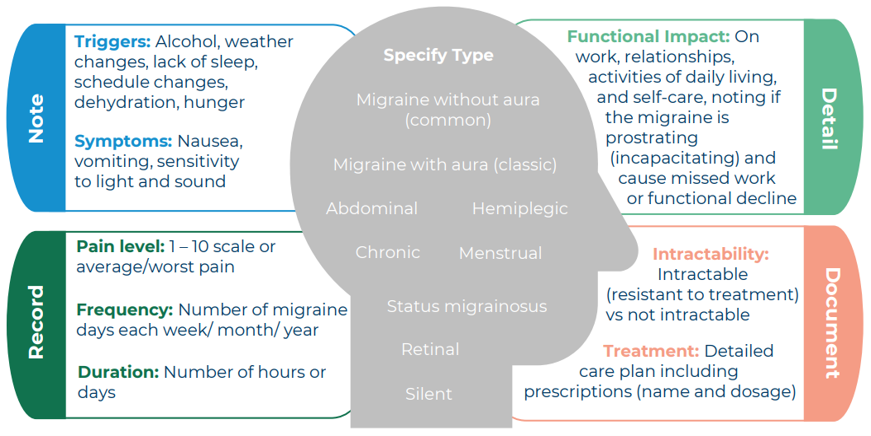
Documenting Migraines
ICD-10 codes from category G43 should be used when coding for Migraine. Characterizing migraine by specific type allows for an accurate reflection of disease burden.
For additional coding guidance on migraines, including a video presentation, visit the updated Coding Education HCC University on the Provider Resource Center.
Quick Info
Never miss out on what matters. Subscribe to our emails and stay informed.